You didn't open a restaurant to think about servers and data infrastructure. But there's a good chance that right now your POS system is quietly costing you money, speed, and guest loyalty, and the reason comes down to where your data lives.
At Qu, our POS works differently to solve this as the first provider to natively bring edge computing to restaurant technology.
What Is Edge Computing, Really?
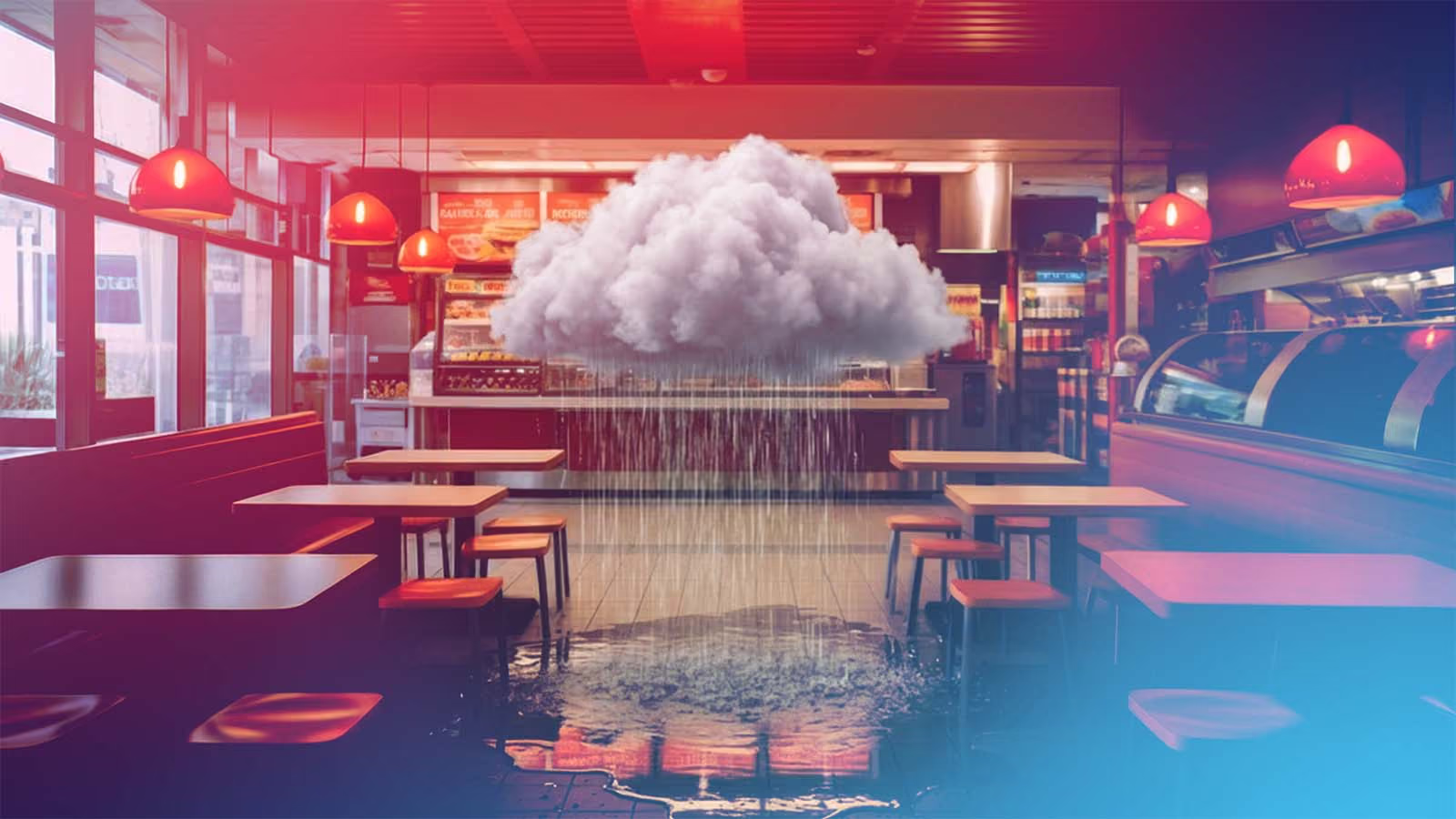
Think about the last time your internet went down at a location. Or the kitchen display froze mid-rush. Or when your POS couldn't process an order because it lost connection to the cloud.
When your system is cloud-dependent, every transaction, every order, every menu lookup has to make a round trip to a remote server and back before anything happens. When the connection is fast and stable, you don't notice. When it isn't, everything breaks.
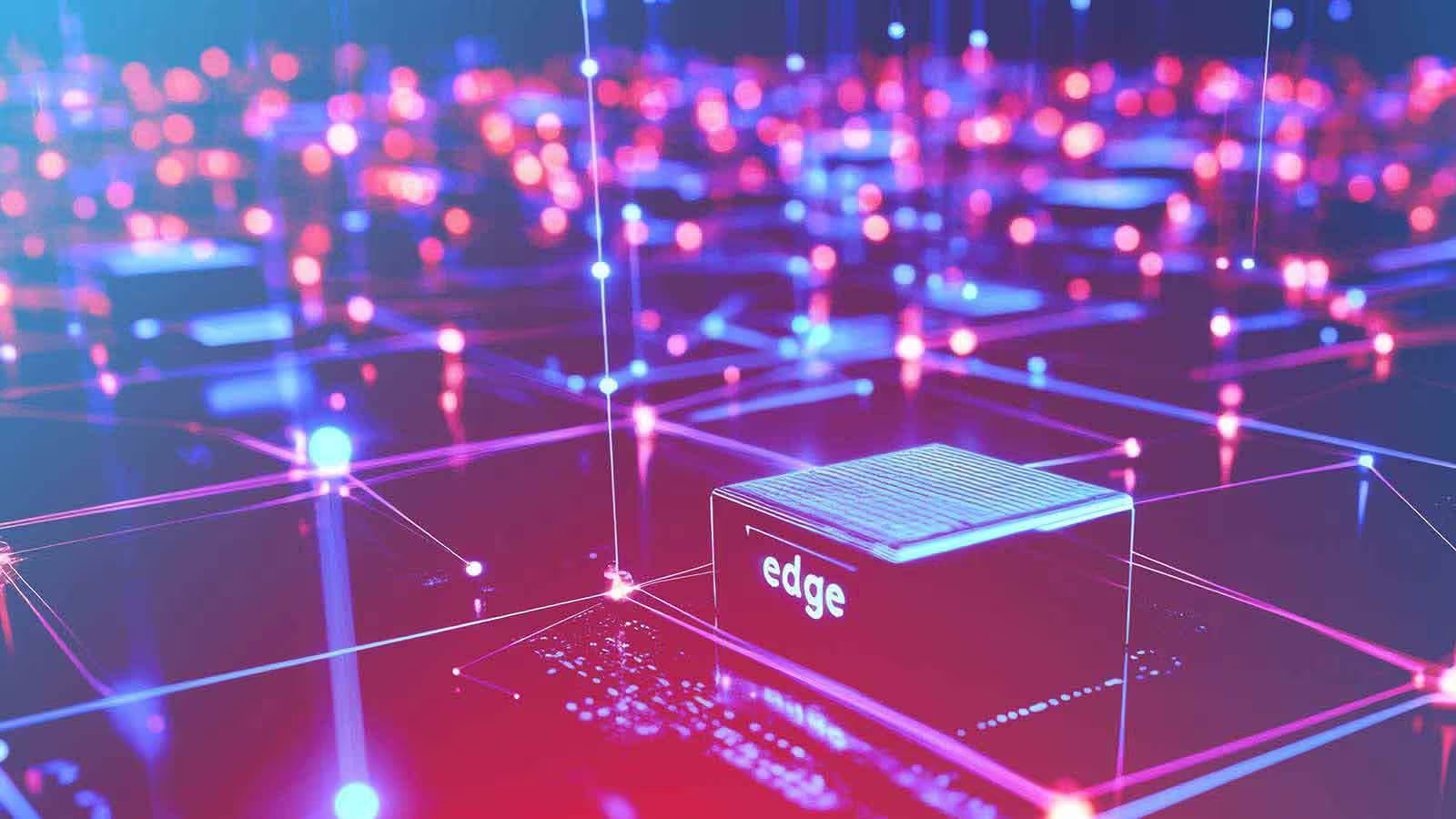
Edge computing solves this. Instead of sending every request to a distant server, the critical processing happens right there, at your restaurant, on the device, at the counter, in the kitchen. The "edge" is just the location where the work actually gets done: your store.
Think of it like the difference between a team member who knows the menu thoroughly and can handle any order thrown at them, versus one who has to radio the manager before doing anything. When it's peak hour and the line is out the door, you already know which one you want on the floor.
Your POS should work like that first team member.
What Are the Real Operational Benefits of Edge Computing for Restaurants?
- Lower cost of ownership over time. Fewer outages mean fewer comps, fewer frustrated guests, and fewer service calls. Systems that don't depend entirely on cloud connectivity tend to be more stable, require less emergency intervention, and have a longer useful life in high-demand environments, ultimately saving you time, money and headaches.
- Your restaurant keeps running when the internet doesn't. Edge-enabled systems process orders locally, so a Wi-Fi outage doesn't shut down your line, transactions are still completed, and guests get served. You find out about the connection issue after the rush, not during it.
- AI that works without a cloud bill to match. Running AI models in the cloud is expensive; every inference, every upsell prompt, every voice order gets priced by the call and routed through an external server. With edge computing, AI runs locally at the restaurant, which means faster responses, no per-query cloud costs, and models that work even when connectivity is unreliable. For operators running AI across hundreds of locations, the difference in infrastructure cost adds up fast. Edge-first AI is a fundamentally more reliable and cost-efficient way to scale intelligence across your brand.
- Faster order processing, every time. When data doesn't have to travel to a cloud server and back, transactions are processed in milliseconds instead of seconds. That's meaningful in a drive-thru lane, at a kiosk with a line behind it, or on a tablet at a busy counter. Edge Computing gives you the speed and accuracy you need to drive return visits.
- Better data, collected in real time. Because processing happens locally and syncs back to a central platform, operators get complete transactional and operational data even from offline periods. You see the full picture across every location all the time.
Why Does Edge Computing Matter More for Restaurant Tech Right Now?
In today’s technology-first world, guests aren't patient. A three-second lag at the kiosk, a frozen screen during peak hours, and a failed payment are more than just minor inconveniences today; they’re experiences that define your brand in that guest's eyes. These experiences compound, whether good or bad, and they appear on your P&L and retention rates.
The restaurant industry has multiplied its ordering channels over the last decade: in-store POS, kiosks, drive-thru, mobile apps, first-party ordering, marketplaces, third-party delivery, and catering platforms. Every new channel is another connection point. Every connection point is another potential failure if your system can't function independently of the cloud.
Operators running 50, 100, or 500+ locations can't afford that fragility.
The Bottom Line
Your guests don't know what edge computing is. They just know whether their order went through, whether the kiosk worked, and whether they rolled their eyes at the drive-thru wait times. All impacting whether they come back.
The operators who will win the next decade aren't necessarily the ones with the flashiest app or the most loyalty points. They're the ones whose systems work reliably and quickly for every visit and every shift.
That's what the right architecture makes possible. And it starts with understanding that where your data gets processed is an operational decision with real consequences for your guests, your team, and your bottom line.