MOMENTS TO LISTEN FOR:
- Margins, not people, have challenged the industry when it comes to adopting the best foundational technology
- The recent pace of change (and pandemic) forced many large restaurants chains to bolt new technology onto old legacy architectural foundations, creating more friction with operator and guest experiences
- The goal is: How do we make technology invisible in the restaurant?
- Frictionless experiences are not the best goal - LESS FRICTION is the more attainable goal.
- The pace of tech adoption has been slower in our industry, but when it does happen with enterprise-level brands, it is very well thought out and planned.
- Focusing on your #1 asset - People - is how you can have the biggest impact.
Key Insights
Technology Should Be Invisible, Not Overwhelming - Restaurants shouldn’t aim to eliminate friction completely-but to reduce it. The real issue today is too many disconnected tech solutions creating complexity, higher costs, and inefficiencies. The goal is a more seamless system with fewer tools that actually work together behind the scenes.
Innovation Requires Collaboration - The future of restaurant tech isn’t built by one company alone. Real progress happens when operators, tech providers, and partners work together. Innovation has to be shared and aligned with what restaurants actually need to succeed.
Adoption Is Slow—But Intentional - The industry isn’t lacking ideas or talent—it’s constrained by tight margins. That’s why tech adoption takes time. But when restaurants do invest, it’s strategic and well thought out, not rushed.
People Drive the Entire Experience - Great guest experiences start with employees. Building a strong, trust-based culture turns staff into true brand ambassadors and directly impacts customer satisfaction
Episode Highlights
Making Technology Invisible in Operations
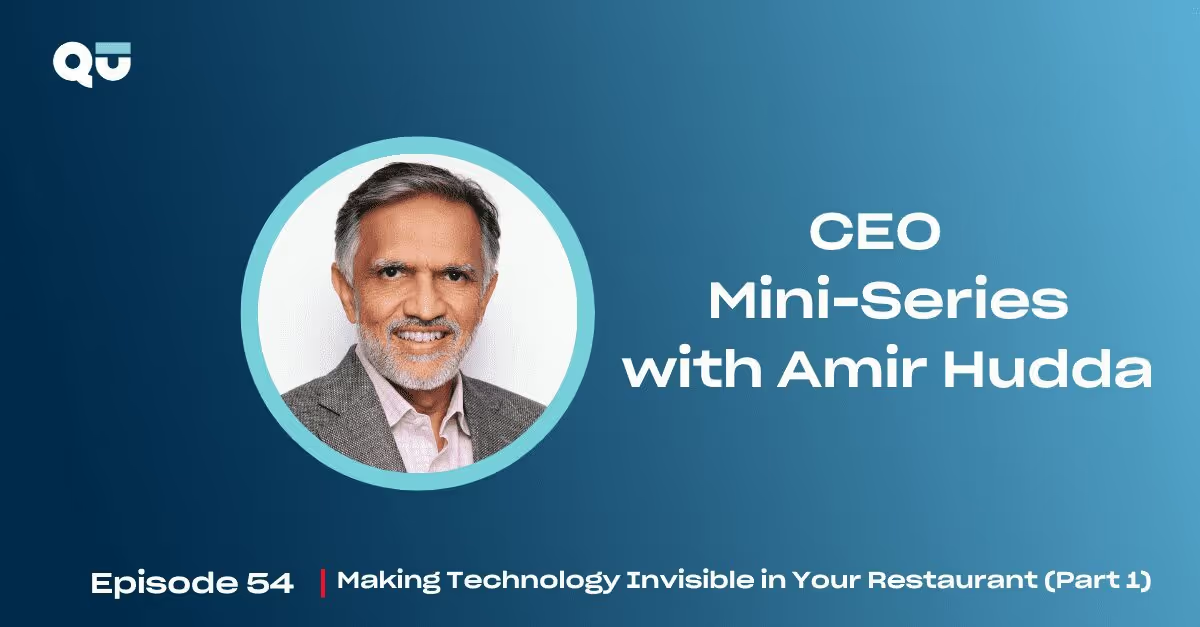
Amir explains that the goal isn’t to completely eliminate friction-it’s to reduce it. With so many different tech tools in the restaurant space, trying to create a perfectly frictionless system just isn’t realistic. Instead, the focus should be on simplifying operations and making technology feel seamless.
”How do we make technology invisible in restaurant operations? It cannot get in the way. Part of the reason it gets in the way is … all these different technologies came about, new companies came about very quickly and were successful in selling their application. But it increased costs and reduced efficiency for operators"
Innovation Takes a Collective Effort
Amir emphasizes that real progress in the restaurant industry can’t happen in silos—innovation only works when everyone moves together.
“Innovation can’t happen in isolation. For real impact, the entire industry—operators, partners, and tech providers—has to work together to move things forward.”