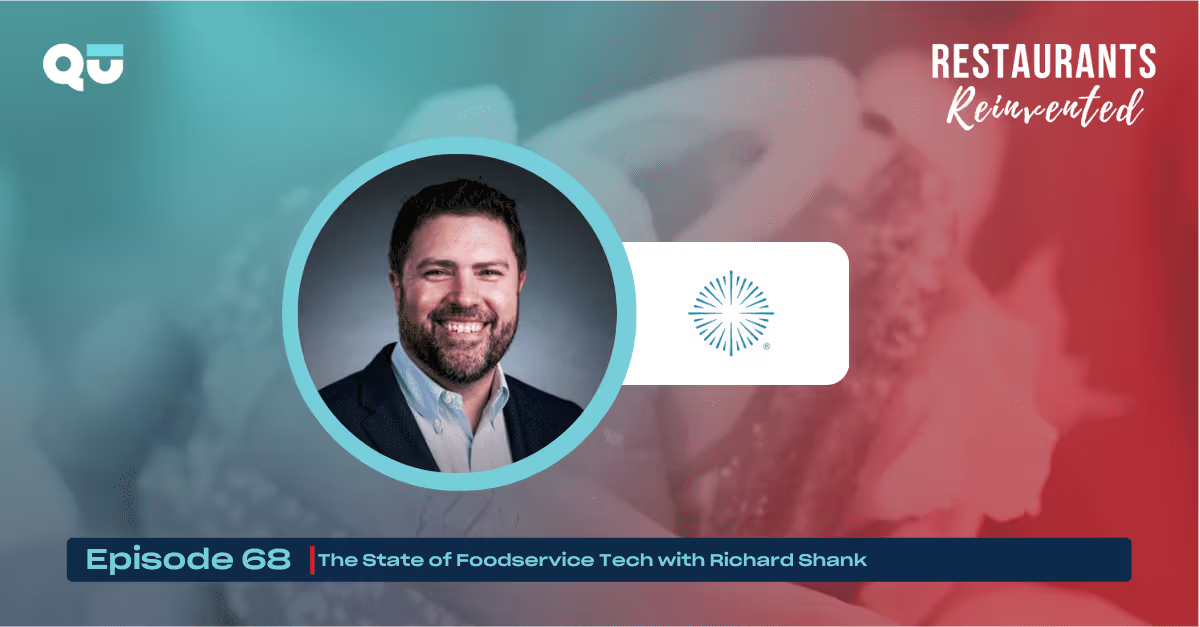
Get ready to hear all the juicy data and trends that came out of Technomic's "State of Foodservice Technology" report. Our guest, Richard Shank is the Sr. Principal & VP of Innovation at Technomic and he shares all the leading insights from the report with us.
Moments to listen for:
- Richard emphasizes that all systems, from front-of-house to back-of-house, must align with the kitchen for a smooth customer experience.
- Artificial Intelligence (AI) is not just a buzzword; it's a tool that can revolutionize the restaurant industry
- Restaurants need to innovate in the loyalty space, focusing on personalization and strategic rewards to truly engage customers.
Key Insights
The Kitchen as the Nucleus - The kitchen isn’t just for cooking; it’s the core of the restaurant. Richard Shank emphasizes that all systems, from front-of-house to back-of-house, must align with the kitchen for a smooth customer experience. The idea is to unify all operations around the kitchen, making it the central hub. This approach is not just about food preparation but about fulfilling customer orders in a way that meets or exceeds expectations. The kitchen’s efficiency directly impacts customer satisfaction, making it a critical focus for restaurant operators.
The Role of AI in Restaurants - Artificial Intelligence (AI) is more than a buzzword; it’s a tool for predictive analytics in demand and labor planning. Richard points out that while AI can significantly aid in decision-making, it shouldn’t replace human judgment. The integration of AI requires careful planning to ensure it complements existing processes. It’s about striking a balance between machine efficiency and human intuition to create a seamless customer experience.
Rethinking Customer Loyalty - Loyalty programs are undergoing a transformation. It’s no longer just about points or free meals; it’s about creating a personalized experience for the customer. Richard suggests that the industry needs to innovate in the loyalty space, focusing on personalization and strategic rewards to truly engage customers. The old models are broken, and there’s a need for a more nuanced approach that goes beyond mere transactions..
Episode Highlights
The State of Food Service Tech Report
Jen Kern opens the conversation by discussing Richard Shank’s presentation on the state of food service tech. She mentions how Richard’s insights resonated with her, especially after her private meetings with operators and discussions during FSTEC. The report sets the stage for the episode, outlining the major themes and challenges facing the restaurant industry.
The Importance of Decision-Making Redundancy
Richard talks about the concept of “decision-making redundancy,” especially when implementing automated tools and AI in restaurants. He stresses the importance of having a human element to counterbalance automated decisions, ensuring that the technology serves the restaurant and not the other way around. “If you’re going to be rolling out a lot of automated tools that are, you know, built on either generative AI or predictive modeling versions of AI. It’s important for you to build in a human redundancy factor.“
The Complexity of Tech Integration
The conversation shifts to the challenges of integrating various technologies in restaurants. Richard mentions that many larger brands struggle with this, often due to shaky foundations. The key is to simplify the tech stack and ensure all components are integrated properly. “The shaky foundations are where we see the larger brands really struggling because they’re trying to connect all the things.“
The Future of Restaurant Innovation and Loyalty
As the episode nears its end, Jen and Richard discuss the future of innovation and loyalty in the restaurant industry. They talk about the role of data and the emergence of new loyalty companies that promise more personalized experiences for customers.“The data’s there, and the data’s coming, and so, all the smart people listening, here’s the opportunity — innovation and loyalty, right? Smart, strategic innovation and loyalty that, yes, absolutely has to come down to personalization.”